
The ER That Time-Traveled (and Other Mysteries)
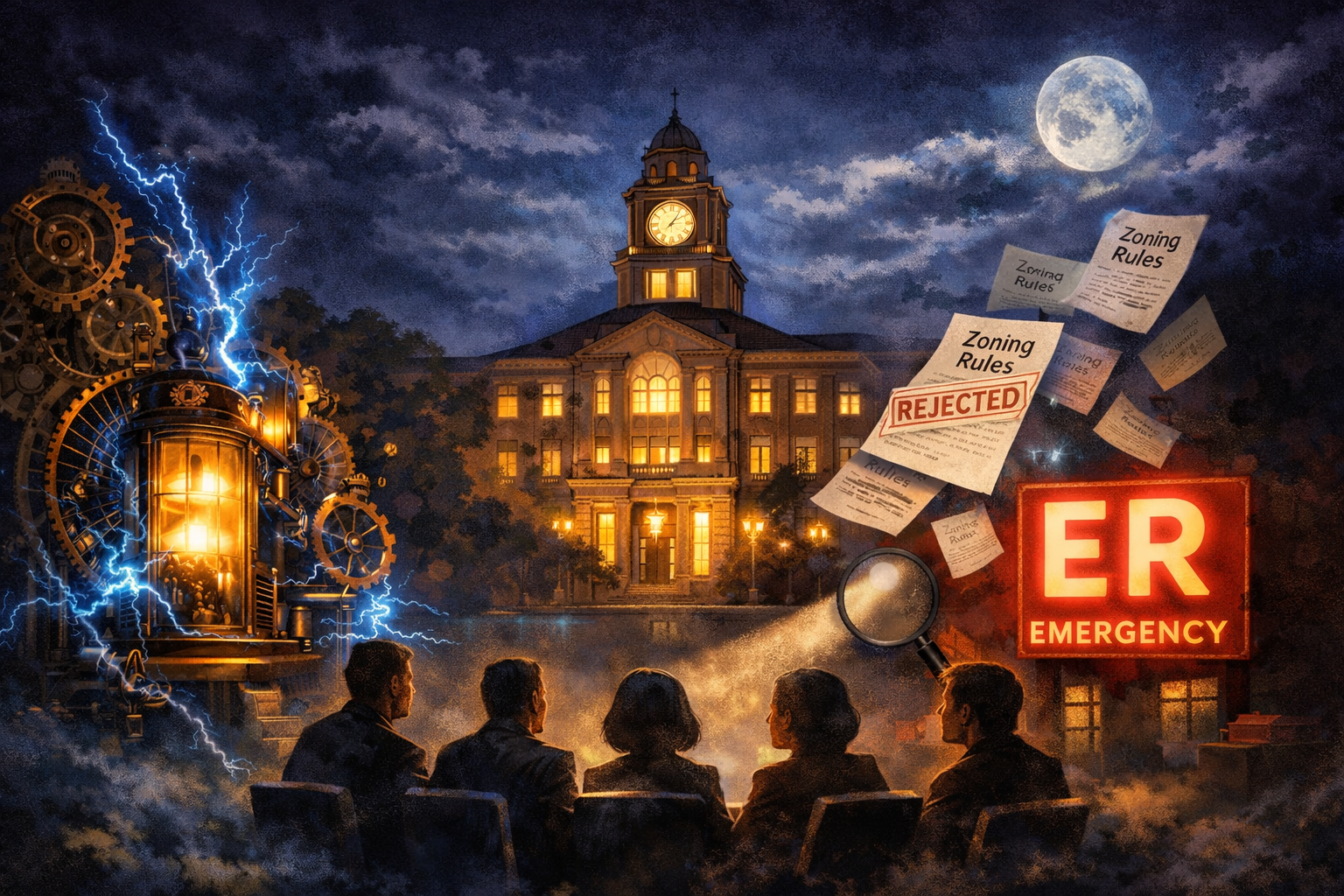
City Hall After Dark
Boca Raton, pull up a chair. According to a recent report, a freestanding emergency room proposal that city planners said fit the rules was later told it didn’t — after the rules changed. If that sounds like zoning by time machine, you’re not alone.
So tonight, City Hall After Dark does what it does best: asks the questions people mutter on the drive home. Not accusations. Not verdicts. Just bright lights on the shadows — with a little satire for visibility.
⸻
The Unanimous Plot Twist
A 5–0 vote overturned a project previously deemed permissible, followed by a swift ordinance rewrite that—purely coincidentally, we’re sure—made the original site nonviable. Naturally, residents wondered how a green light turned red without the light changing color.
Which brings us to our evening roll call.
⸻
Mayor Scott Singer
Question, Mayor:
When planning staff says “yes” and Council says “no,” which is the compass residents should trust? The map, or the moment?
Also, was the concern about where emergency care goes — or who brings it? Because from the gallery, it looked less like traffic engineering and more like competitive choreography.
⸻
Deputy Mayor Fran Nachlas
Question, Deputy Mayor:
You introduced an ordinance that technically “allows” freestanding ERs — provided they meet criteria that the already-approved site suddenly didn’t. Is that zoning, or a magic trick?
If the rules needed fixing, why fix them after the project passed inspection? And why does the fix fit the future but not the present?
⸻
Council Member Andy Thomson
Question, Council Member:
What data tipped the scales? Response times? Access? Public safety metrics? Or was the deciding factor more… philosophical?
Residents would love to see the math behind a vote that treats emergency medicine like a variance instead of a service.
⸻
Council Member Yvette Drucker
Question, Council Member:
Mid-stream rule changes tend to spook people — especially when healthcare is involved. What problem did the new ordinance solve that the old one couldn’t?
And if the answer is “clarity,” why does it feel foggier now?
⸻
Council Member Marc Wigder
Question, Council Member:
Unanimity is powerful. It can also be puzzling. What persuaded you that overturning staff findings — and rewriting the playbook — was the best path for public trust?
Because to the outside world, it looked less like due process and more like déjà vu with a red pen.
⸻
The Group Question (Because This Was a Group Decision)
If a project meets the rules on Monday, fails new rules on Tuesday, and the rules were written on Tuesday afternoon — when exactly did it stop being acceptable?
And the bigger one: Who benefits when emergency care options shrink, even as the city grows?
⸻
Why This Matters (No Punchlines Here)
Emergency rooms aren’t coffee shops. Access, proximity, and minutes matter. Zoning absolutely matters too — but so does consistency. When standards shift mid-game, confidence erodes. When decisions feel pre-decided, trust follows.
City Hall After Dark isn’t here to tell you what to think. We’re here to make sure the questions don’t get buried under procedural paperwork or polite applause.
Because if the rules can change after approval, the only thing residents can’t plan for… is the process itself.
Lights on. Questions asked. See you after dark.